


HAULR brings live load tracking and over 2000 bridge restrictions together for New Zealand's OD industry
For an operator moving over-dimensional equipment and goods, there is the load itself, the truck and trailer combination, permits, route planning and scheduling. For the load pilot, there is the responsibility of getting the load safely through traffic and around the obstacles that can turn an otherwise straightforward trip into a difficult one – even a nightmare sometimes.
Then there are the other people involved in the move: the yard staff, the people waiting at the destination and, importantly, the other road users who may suddenly find themselves approaching several metres of house, machinery or other freight occupying a significant part of the road.
It is the information gap between all those people that New Zealand-developed HAULR is attempting to address.
Described by its developers as “a flight tracker, but for the road”, HAULR has been developed specifically around the requirements of over-dimensional transport. Its core features include live tracking of over-dimensional loads, information on bridge weight and height restrictions, and a pre-trip health and safety checklist developed specifically for OD operators.
And the idea came from people who know the job from the inside.
HAULR co-founder Raquel Wheatley has been a certified load pilot for eight years. In 2021 she began contracting independently through Ultimate Load Piloting and gained her Class 1 certification. Her husband and HAULR co-founder, Rhys, has a decade of experience driving trucks and operating Hiabs and is also a Class 1 Load Pilot.
“We built HAULR completely our way – a tool that we knew had to be good enough for our JRP team [featured in DOW 319 – Ed],” Raquel says.
That background is important because the app has not been conceived as a generic mapping application with a few heavy-vehicle functions added later. It has come from the practical frustrations of people actually involved in OD movements.
Knowing where the load is
Specialist transport applications can be different from conventional navigation softwareLive tracking is at the heart of HAULR.
Traditionally, an OD move can involve several people communicating by radio and telephone while each has an idea of where the load is and where it is going. The problem, Raquel says, is that “most near misses stem from the same issue: somebody didn’t know exactly where it was”.
HAULR puts the moving load onto a live map.
That potentially changes the information available to everyone involved in the job. The truck crew and pilots can see the movement, while the yard can have a clearer idea of when the load is approaching. For an operator, there is also the ability to see where a specialist or high-value movement is without having to rely entirely on a series of phone calls.
But HAULR’s developers see an even wider application for the live map.
An approaching road user could potentially see that an over-dimensional load is coming towards them. Someone planning a trip could see that an unusually wide load is travelling along their route and make a decision to wait or take another road.
Raquel gives the example of an eight-metre-wide house move.
“Knowing what’s ahead changes how you drive toward it,” she says.
It is a simple concept, but one that could have significant implications for road safety.
The missing bridge information
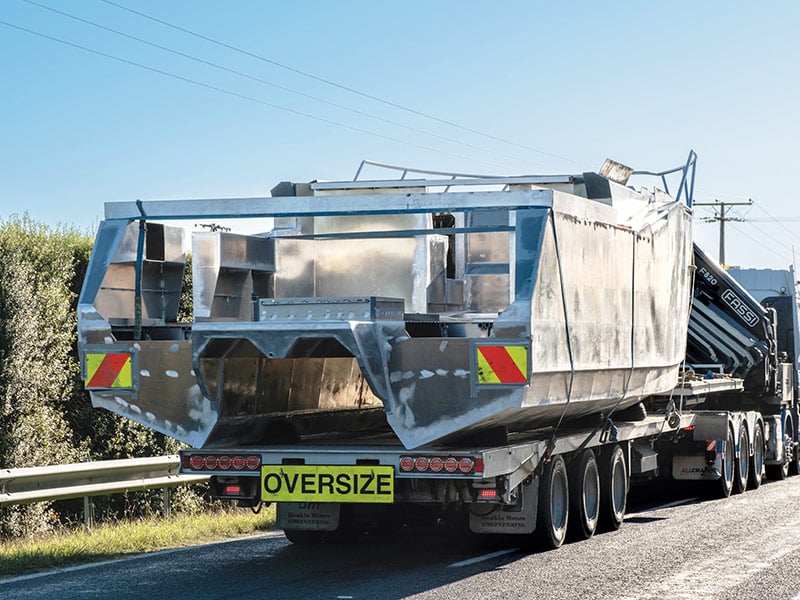
The second major element of HAULR is the underlying road restriction data.
New Zealand’s bridge and height restriction information is not held in one easily accessible national database, according to Raquel. Instead, information is spread across more than 60 council systems as well as NZTA’s state highway records, with data held in different formats and varying degrees of availability.
For an operator planning an over-dimensional movement, that can be a problem.
A conventional mapping application may provide an excellent route from A to B, but that does not necessarily mean the route is suitable for a particular truck and load.
HAULR’s developers have spent the past year working through council and NZTA information, checking and cross-referencing available records.
The resulting dataset now contains more than 2000 bridges and structures with confirmed weight or height restrictions from councils, NZTA or other official sources. Raquel says the number is continually changing as restrictions are added or removed.
That work illustrates why specialist transport applications can be different from conventional navigation software.
For a car driver, a bridge restriction may be an interesting piece of background information. For an operator with a 50-tonne machine on a low-loader, it can determine whether the route is usable at all.
The gap being filled
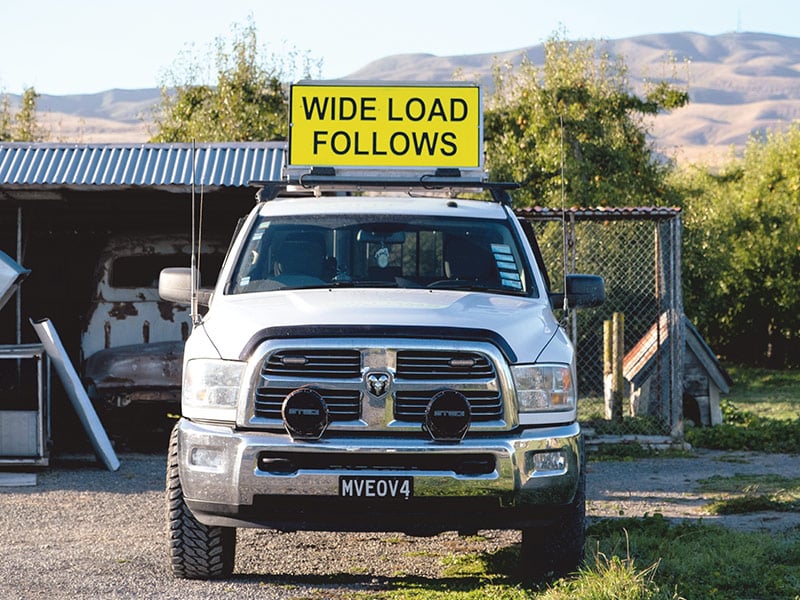
Another point Raquel makes is that not every operator moving a large load is necessarily operating within the same permit framework.
NZTA’s current rules require an over-dimension permit in a range of circumstances, including vehicles or loads exceeding specified dimension limits, and certain loads also require route assessments, pilots or additional permissions.
But the requirement to understand the physical limitations of the road network does not disappear simply because a particular move falls outside the largest categories of over-dimensional work.
“There just isn’t one consolidated data set,” Raquel says.
That is the gap HAULR is attempting to fill.
For the owner-driver, it could mean having more relevant information available on a smartphone rather than jumping between different sources. For larger operators, it potentially provides another layer of visibility across specialist movements.
A safety tool as well
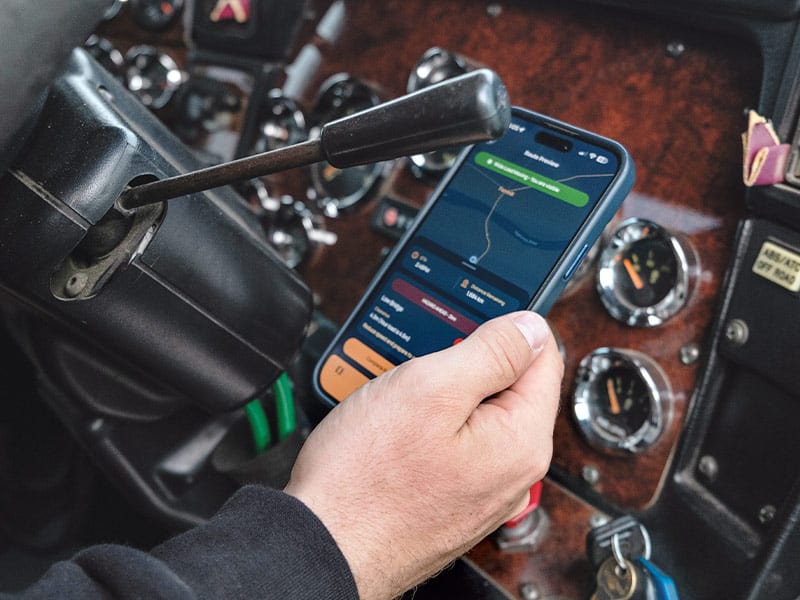
HAULR also includes a pre-trip health and safety checklist specifically designed for over-dimensional operators.
That is consistent with the developers’ broader view that technology should help reinforce the planning process rather than replace it.
NZTA’s requirements remain in place: operators are responsible for ensuring vehicles and loads comply with the relevant rules, routes are assessed where required, appropriate pilots are provided and permits and other conditions are followed.
HAULR does not remove those responsibilities.
Instead, its purpose is to put more useful information in front of the people responsible for carrying them out.
Built by people doing the job
Perhaps the most interesting thing about HAULR is that it has been developed from a fairly simple question.
“The pivotal point was about a year ago when we thought – why can’t we build it?” Raquel says.
The result is a subscription platform aimed at drivers, load pilots and fleet operators, with the restriction database sitting alongside live load tracking and the OD-specific safety checklist.
For Raquel and Rhys, the project has involved building a technology business while continuing to work in the transport industry.
“We’re at the frontline, so we know exactly what a load pilot needs,” Raquel says.
Coming soon
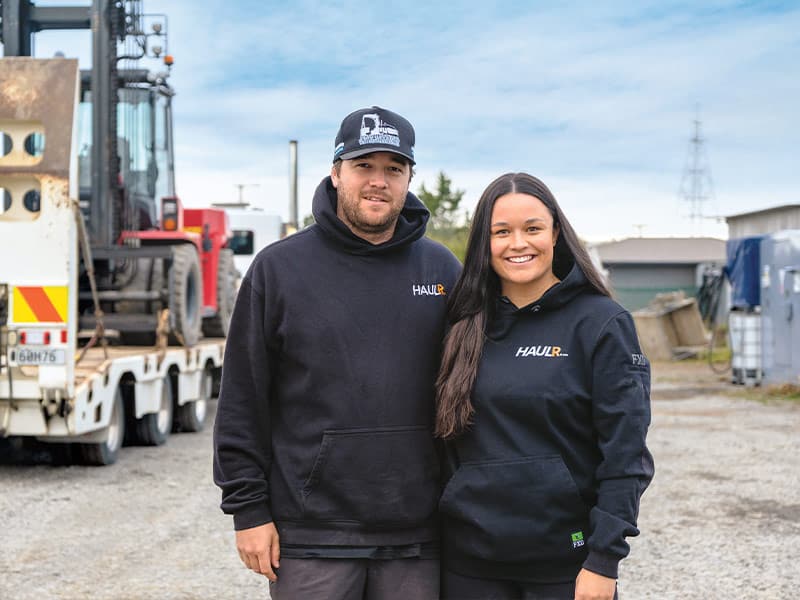
HAULR is soon to be rolled out in New Zealand, with drivers and operators able to join the early-access programme through the company’s website.
HAULR ultimately has the potential to become an everyday tool across the heavy transport industry, and that will depend on how comprehensive its data becomes and how readily operators, pilots and road users adopt it.
But the problem it is attempting to solve is real.
New Zealand’s over-dimensional transport industry relies heavily on experience, communication and local knowledge. HAULR’s approach is to bring more of that knowledge together in one place – and make it available before, during and around the journey.
For an industry where knowing what is around the next corner can be the difference between a smooth trip and a very difficult one, that could prove useful indeed.
For more information, contact haulr.co.nz
Images by Leah Roberts Photography
