


The fleet industry gathered at Mystery Creek Events Centre near Hamilton on 5–6 August for EROAD Fleet Days 2026
For truck operators, the two-day event provided an opportunity to look at the latest developments in heavy vehicles, safety technology, telematics and alternative drivetrains, while also getting behind the wheel or taking a passenger ride in some of the vehicles on display.
The move from Fleet Day to Fleet Days reflects the growing complexity of commercial vehicle operation. Trucks are becoming increasingly connected, safety systems are becoming more sophisticated, and operators are being asked to consider alternative fuels and powertrains alongside the traditional concerns of payload, reliability, running costs and driver availability.
Brands on display
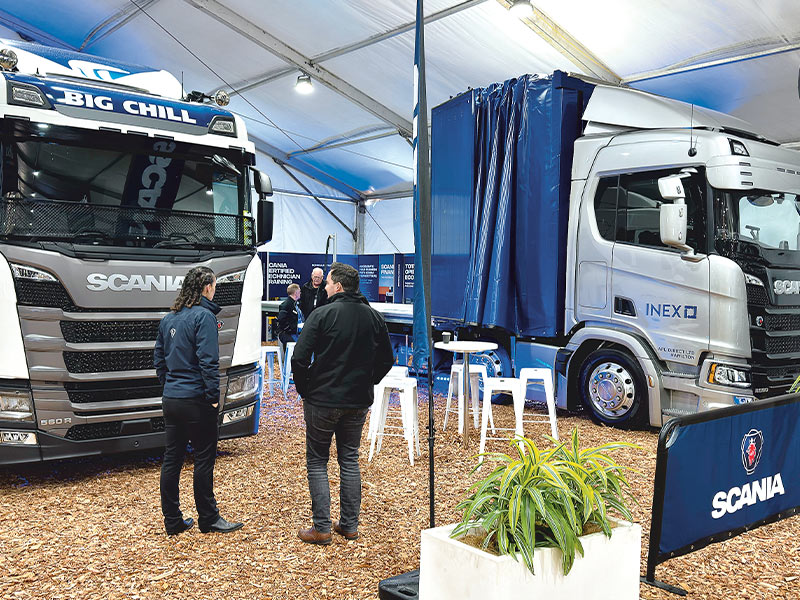
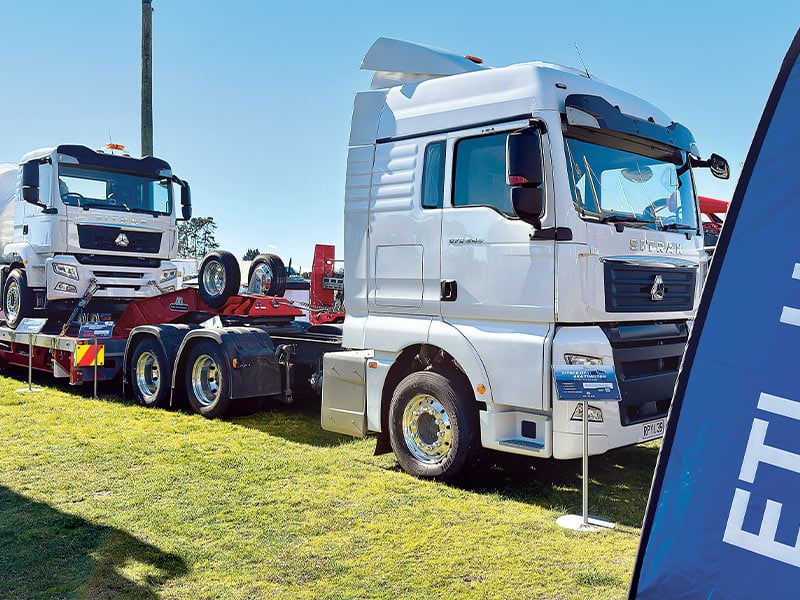
Among the manufacturers represented were Iveco, JAC, Foton, UD Trucks, Volvo, Scania, Hyundai, Sitrak, and E-Trucks, giving visitors the opportunity to see a range of current heavy and medium-duty trucks in the New Zealand market. The event also included an outdoor heavy-vehicle showcase, providing a useful contrast to the technology-heavy indoor exhibition.
“It’s an event that the industry has been asking for and we’re privileged to put this together,” says EROAD senior enterprise sales manager Matt Buckle.
“We’ve seen a dramatic increase in size from when we started eight years ago. The great thing is we get to bring all of the automotive industry together and share what is going on in their sectors.”
For truck operators, seeing a vehicle in the flesh remains important. Specifications and brochures can provide information about engine power, transmission, axle configurations and payload, but they do not tell the whole story. Cab access, visibility, storage, seating position, controls and the general working environment are all important considerations for a driver who may spend many hours behind the wheel.
Test drive areas
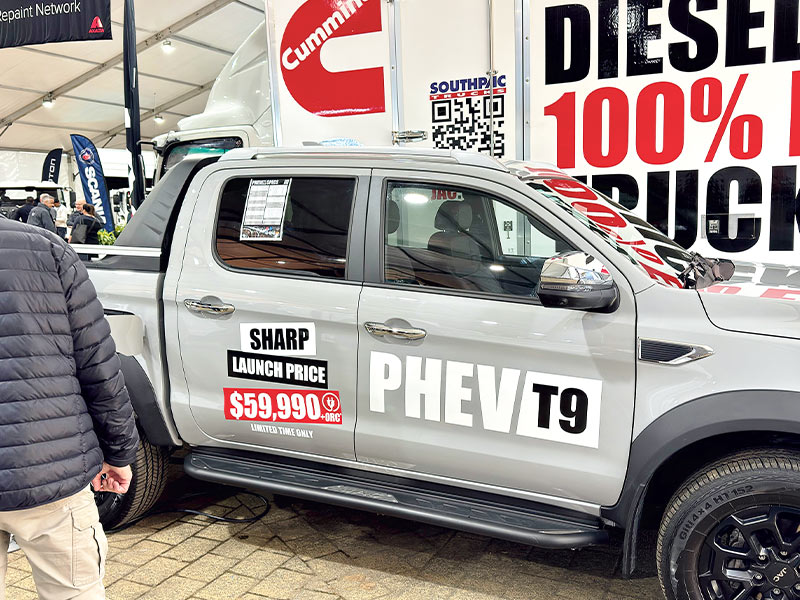
The practical side of the event was strengthened by the opportunity to experience vehicles on the road. The test-drive area allowed visitors to sample vehicles rather than simply inspect them, while the heavy-vehicle component provided a closer look at the trucks and equipment being offered to New Zealand fleets.
The 2026 event also introduced a 4×4 course, adding another practical element for operators running vehicles away from sealed roads. While much of the discussion around fleet electrification focuses on urban delivery vehicles and passenger cars, commercial fleets are considerably more diverse. Trucks and support vehicles can be expected to operate on construction sites, farms, forestry roads, quarries and remote locations where terrain and operating conditions can have a major influence on vehicle choice.
Comparing power sources
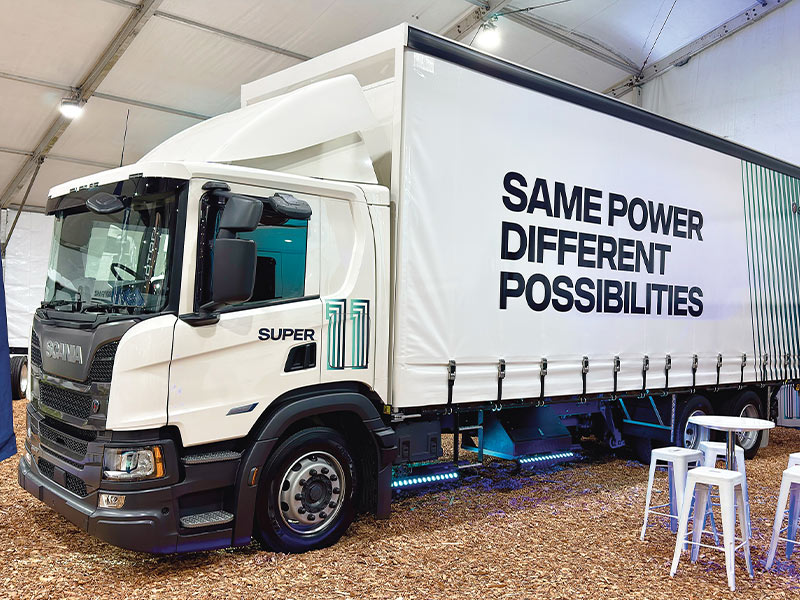
Electrification was nevertheless one of the bigger issues confronting the industry. Battery-electric trucks are gradually moving from demonstration projects into commercial operation, although their suitability remains heavily dependent on the application.
For a rigid truck operating predictable urban routes, overnight depot charging may make considerable sense. For a linehaul truck covering hundreds of kilometres a day, the calculation is more complicated. Payload, range, charging time, grid capacity and the availability of suitable charging infrastructure all become part of the equation.
This is where fleet events such as Fleet Days are useful. Operators can compare conventional diesel trucks with newer electric and alternative-fuel vehicles while also talking directly to the companies developing the infrastructure and software required to operate them.
Safety and telematics
Safety was another major theme, particularly relevant to heavy vehicles. Trucks occupy a different position on the road from passenger cars, and their size creates challenges around visibility, stopping distances and interaction with vulnerable road users.
Modern driver-assistance systems are increasingly being fitted to trucks, with technologies designed to provide warnings or intervene when a collision appears likely. Cameras, radar, lane-departure warnings, automatic emergency braking and blind-spot monitoring are becoming increasingly familiar features.
The challenge for operators is understanding how those systems work in real-world conditions and how they complement rather than replace the driver.
Telematics is playing a similarly important role. Fleet-management systems can now monitor much more than vehicle location. Information on driver behaviour, vehicle utilisation, fuel consumption, harsh braking, acceleration and other events can be used to identify trends across an entire fleet.
The scale of the data involved is considerable. EROAD’s presentation describes a network of more than 250,000 devices and almost one billion dollars last year in RUC transactions, illustrating how much information can now be generated by connected commercial vehicles. The company’s platform roadmap also covers areas including safety, fleet reporting, geospatial information, productivity and dispatch and execution.
For a truck operator, that information can have practical value. Fuel is one of the largest variable costs in many heavy-vehicle operations, while unnecessary idling, excessive acceleration and inefficient route planning can quickly add up across a fleet.
Clarity camera tech
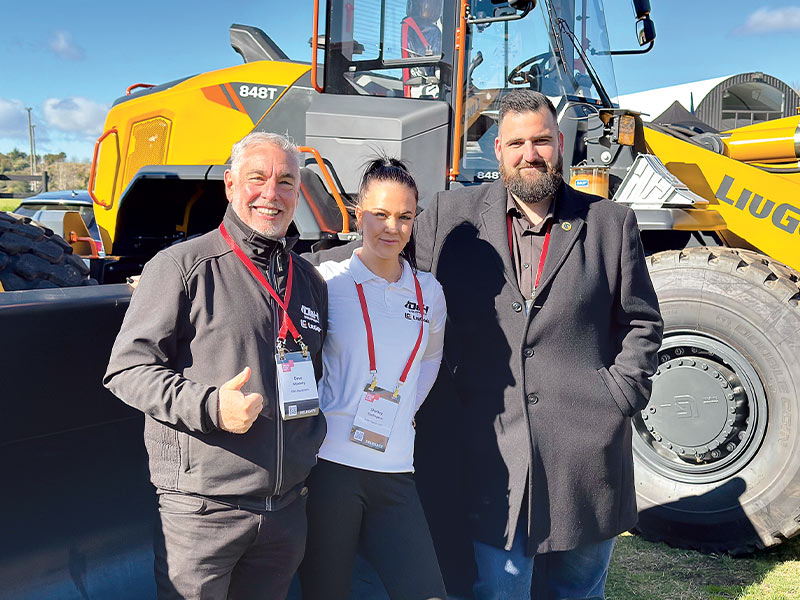
Driver monitoring is also becoming more sophisticated. EROAD’s Clarity camera technology was among the technologies showcased, with its systems designed to identify issues such as fatigue, mobile-phone use and driver distraction. Its newer Clarity Edge Multicam system extends camera coverage around the vehicle, providing greater visibility of what is happening outside the cab.
For heavy trucks, the ability to monitor areas around the vehicle is particularly relevant. Blind spots have long been a problem, especially around the passenger side of large trucks, and camera technology can provide drivers with additional information that conventional mirrors cannot.
The technology also raises an important question for operators: what should be done with all the data being generated?
Collecting information is relatively easy. Turning it into something useful is more difficult. Fleet managers need to be able to identify the small number of events that require attention rather than being overwhelmed by a constant stream of alerts.
That means the future of fleet management is likely to involve a combination of vehicle technology, software and human judgement. A telematics system can identify excessive braking, for example, but it still takes a manager to determine whether the event was caused by poor driving, an unexpected hazard or simply the conditions on the road.
EROAD’s longer-term technology roadmap points towards an increasingly integrated approach, with its next-generation platform bringing together vehicle, driver, customer, location and telemetry information. It is also looking at AI-native systems, moving beyond basic prompts and assistants towards greater use of automated data analysis and operational support.
The same applies to fuel consumption, maintenance and vehicle utilisation. The value of connected trucks ultimately comes from using the information to make better decisions.
Show and Shine
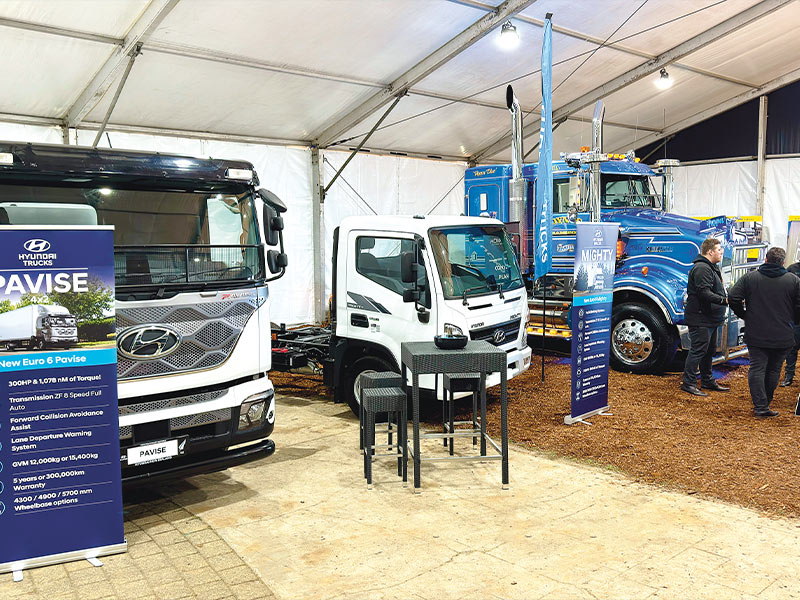
Away from the formal conference programme, the event also retained an element of traditional truck culture with the introduction of a Truck Show and Shine. That addition recognised that commercial vehicles are more than just another line on a fleet spreadsheet. For many operators and drivers, trucks remain machines that are worked on, maintained and, in some cases, proudly personalised.
It also provided a useful reminder that the transition towards connected and electric vehicles is not going to happen overnight. New diesel trucks will continue to form the backbone of many New Zealand fleets for years to come, while older trucks remain in service because they are paid for, familiar and capable of doing the job.
The challenge for operators is therefore one of managing a transition rather than simply replacing one technology with another.
Snapshot of transition
EROAD Fleet Days 2026 offered a useful snapshot of that transition. The event brought together conventional heavy trucks, electric vehicles, safety systems, telematics, charging technology and fleet-management software in one location.
For truck operators, perhaps the most useful aspect was not any individual product or technology but the opportunity to compare them. The modern truck is becoming a connected workplace as well as a means of moving freight, and the decisions made by operators today will determine how quickly that change reaches the wider New Zealand transport fleet.
The broader direction of EROAD’s own technology development reinforces that trend. Its roadmap moves towards a connected customer journey, a modernised data platform and greater use of AI, with telemetry treated as one component of a much larger information system rather than an end in itself.
At Mystery Creek, the message was clear: the truck may still be expected to carry the load and get the job done, but increasingly there is a lot more technology helping the operator decide how, when and where that happens.
“Attendees could see the newest innovations and products and also talk to us about the challenges that they are facing,” says Matt. “We were thankful to bring a whole lot of people together and provide that platform as well as provide for new opportunities that are created by networking across the industry.”
For more information, contact eroad.co.nz
Images by David Lott
